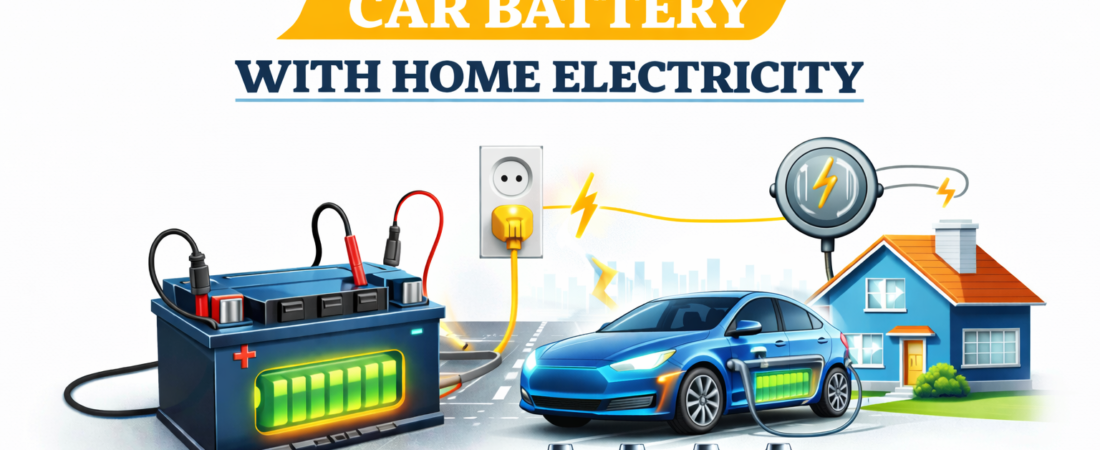
Car batteries sometimes lose power. This can happen if you forget to turn off the lights or if the battery is old. When this happens, you might need to charge your car battery at home.
Charging a car battery at home is possible. But you must be careful. Using the right tools and steps is very important. This guide will help you understand how to safely charge your car battery using home electricity.
What You Need to Charge a Car Battery at Home
Before you start, you need to have a few things ready. Here is a list of what you need:
- Car Battery Charger: This device connects to your battery and plugs into your home electricity.
- Protective Gear: Gloves and safety glasses to protect your hands and eyes.
- Clean Cloth: To clean the battery terminals.
- Well-Ventilated Area: Make sure you work in a place with fresh air.
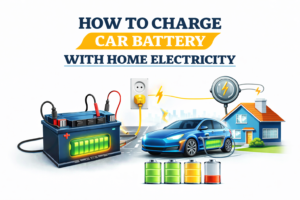
Never try to connect the battery directly to a wall socket. This can be very dangerous. The charger controls the electricity flow and keeps the battery safe.
Steps to Charge Your Car Battery with Home Electricity
Follow these simple steps to charge your car battery safely.
Step 1: Park And Prepare Your Car
- Park your car in a safe and dry place.
- Turn off the engine and remove the key.
- Open the car hood to access the battery.
- Make sure the area is well ventilated.
Step 2: Clean The Battery Terminals
Use a clean cloth to wipe off dirt or corrosion on battery terminals. Dirty terminals can stop the charger from working well.
Step 3: Connect The Charger To The Battery
- Attach the red clamp to the battery’s positive terminal. This terminal has a plus (+) sign.
- Attach the black clamp to the negative terminal. This terminal has a minus (-) sign.
- If the negative terminal is hard to reach, connect the black clamp to a clean, unpainted metal part of the car frame.
Step 4: Plug In The Charger
Now, plug the charger into a normal home AC outlet. Make sure the charger is off before you plug it in.
Step 5: Turn On The Charger And Charge
Switch on the charger. Some chargers are smart and will stop charging when the battery is full. Others need to be watched to avoid overcharging.
Charging time depends on the battery size and how empty it is. Usually, it takes several hours to fully charge.
Step 6: Turn Off And Disconnect
- When charging is done, turn off the charger first.
- Unplug the charger from the wall outlet.
- Remove the black clamp first, then the red clamp.
Do not touch the clamps together during this process.
Safety Tips When Charging Car Battery at Home
Charging a car battery can be safe if you follow these tips:
- Never connect the battery directly to the wall outlet. Always use a proper charger.
- Work in a place with good air flow. Batteries can release gases that are harmful.
- Wear gloves and safety glasses. Protect yourself from acid or sparks.
- Keep flames and sparks away. Battery gases can catch fire.
- Check the charger instructions carefully. Each charger may work a bit differently.
What If the Battery Is Completely Dead?
Sometimes, the battery voltage is very low. In this case, some chargers have a special mode. This mode can wake up the battery by holding a button until lights flash on the charger.
It is best to read your charger’s manual for this feature. Not all chargers have it.
Can You Use Household Items to Charge a Car Battery?
Many people ask if they can use household items to charge a car battery. The answer is no. You cannot use normal wires or other items to connect the battery to home electricity safely.
You must use a battery charger made for this job. The charger controls the power and keeps the battery from damage.
Understanding Car Battery Chargers
There are different types of chargers. Knowing them can help you pick the right one.
| Charger Type | Description | Best For |
|---|---|---|
| Trickle Charger | Charges battery slowly at a low rate. | Maintaining battery charge over time. |
| Smart Charger | Adjusts charge rate and stops when full. | Safe and easy charging at home. |
| Fast Charger | Charges battery quickly but needs careful watching. | When you need battery charged fast. |
Why Use a Smart Charger?
Smart chargers are popular because they are safe. They stop charging when the battery is full. This stops overcharging and damage.
They also protect against sparks and overheating. Using a smart charger is a good choice for beginners.
Signs Your Car Battery Needs Charging
How do you know your battery needs charging? Here are some signs:
- The car engine turns slowly when starting.
- The headlights are dim or flicker.
- The battery warning light on the dashboard is on.
- You have not used your car for a long time.
If you see these signs, it is time to charge your battery.
Frequently Asked Questions
Can I Charge My Car Battery From House Electricity?
Yes, you can charge your car battery using house electricity with a proper battery charger. Always use a charger designed for home outlets. Connect the charger clamps correctly, plug into an AC outlet, and follow safety steps to avoid damage or hazards.
Never connect directly to a wall socket.
Can You Charge A Car Battery With A House Outlet?
Yes, you can charge a car battery using a house outlet with a proper battery charger. Always use a charger designed for home AC power. Connect the charger clamps correctly, plug into the outlet, and monitor charging. Avoid direct connection to prevent damage, overheating, or safety hazards.
What Household Items Can Jumpstart A Car?
Household items like a portable jump starter, battery charger, or a power inverter with proper cables can jumpstart a car. Avoid direct wall outlet connections without a charger. Use insulated jumper cables and connect safely to the battery terminals or car frame to prevent damage or sparks.
How To Charge A 12v Battery At Home Without A Charger?
Charge a 12V battery at home by connecting it to a 12V DC power supply or a regulated power adapter. Avoid direct AC outlet connection. Use clamps on correct terminals: red to positive, black to negative. Monitor voltage and avoid overcharging for safety.
Conclusion
Charging a car battery at home is easy if you follow safety rules. Use a proper charger and work in a safe place.
Remember these key points:
- Use a battery charger made for home use.
- Connect the charger clamps correctly to battery terminals.
- Charge in a well-ventilated area with protective gear.
- Do not connect the battery directly to the wall socket.
- Turn off and unplug the charger before removing clamps.
With these steps, your car battery will get the power it needs. You can get back on the road safely and easily.