Electric vehicles (EVs) are becoming popular worldwide. Many people want to know how much it costs to charge an EV. This article will explain EV charging cost in a simple way. You will learn about charging at home and public stations. We will also look at prices in places like Austin, Texas.
What Is EV Charging Cost?
EV charging cost means how much money you pay to fill your electric car’s battery. This cost depends on many things. It can change if you charge at home or at a public charging station. It also changes based on the size of the battery and the price of electricity.
Charging Your EV at Home
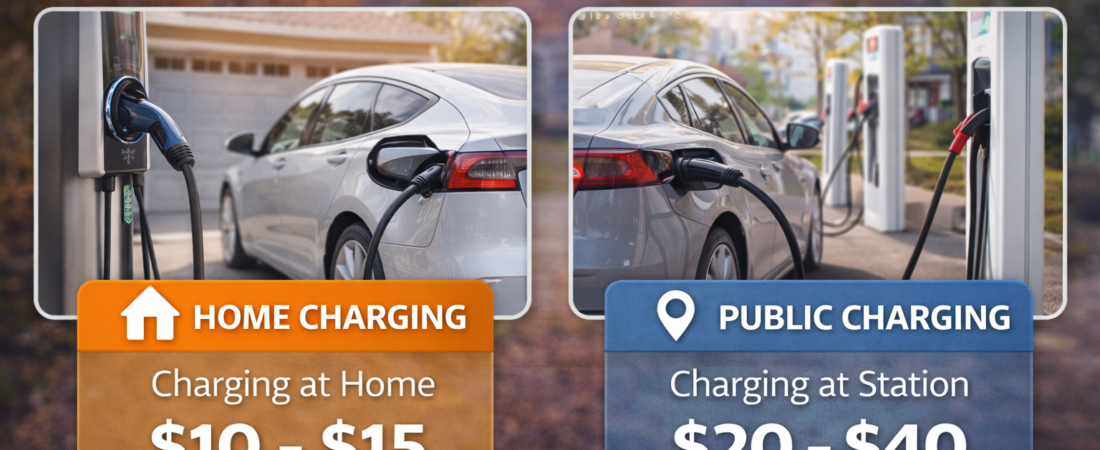
Most EV owners charge their cars at home. Home charging is easy and often cheaper than public charging. To charge at home, you use electricity from your house.
The cost to charge depends on your electric rate. This means how much you pay for one unit of electricity, called a kilowatt-hour (kWh).
How To Calculate Home Charging Cost
Here is a simple way to work out the cost:
- Find the size of your battery in kWh.
- Know your electricity price per kWh.
- Multiply the battery size by the price per kWh.
Example: If your battery is 60 kWh and your electricity price is $0.12 per kWh, then:
This means a full charge will cost $7.20 at home.
Battery Sizes And Charging Cost
Different cars have different battery sizes. Here are some examples:
| Car Model | Battery Size (kWh) | Cost to Fully Charge (at $0.12/kWh) |
|---|---|---|
| Tesla Model Y | 63 | $7.56 |
| MG4 | 51 | $6.12 |
| Generic EV | 59 | $7.08 |
As you see, the bigger the battery, the higher the cost.
Charging at Public Stations
Public charging stations are found in many places like malls, parks, and streets. They are good for people who travel far or do not have home charging.
Public charging usually costs more than home charging. The price depends on the station and the speed of charging.
Types Of Public Charging
- Level 2 Chargers: These are slower and cheaper.
- Fast Chargers (DC Fast Chargers): These charge quickly but cost more.
How Public Charging Prices Work
Public chargers can charge by:
- Time (per minute or hour)
- Energy used (per kWh)
Some stations also have a flat fee or subscription plans.
Example Costs At Public Stations
| Charging Type | Cost | Notes |
|---|---|---|
| Level 2 Charger | $0.20 per kWh | Slower but cheaper |
| Fast Charger | $0.40 per kWh | Fast but more expensive |
So, charging your 60 kWh battery at a fast charger would cost around $24.
Comparing Home and Public Charging Costs
Charging at home is cheaper but slower. Public fast charging costs more but saves time.
Here is a quick comparison:
| Charging Location | Cost per kWh | Time to Fully Charge | Convenience |
|---|---|---|---|
| Home | About $0.12 | 6-12 hours | Very convenient |
| Public Level 2 | About $0.20 | 3-6 hours | Moderate |
| Public Fast Charger | About $0.40 | 30 minutes to 1 hour | High convenience |
Other Factors Affecting EV Charging Cost
Charging cost can change because of different reasons. Here are some:
- Electricity Rates: Prices differ by place and time.
- Charging Efficiency: Some energy is lost during charging.
- Battery Condition: Older batteries may take longer to charge.
- Charging Habits: Frequent fast charging may cost more.
For example, electricity is cheaper at night in some areas. You can save money by charging then.
EV Charging Cost in Austin, Texas
Austin, Texas, has many charging stations. The cost is close to the U.S. average.
At home, the average electricity price is about 12 cents per kWh. Public stations charge between 20 to 40 cents per kWh. Fast chargers may cost even more during busy times.
If you drive a 60 kWh EV in Austin, here is an idea:
- Full home charge: about $7.20
- Full public Level 2 charge: about $12
- Full public fast charge: about $24
Remember, public charging prices can vary by station and time.
How to Save Money on EV Charging
Here are some tips to lower your EV charging cost:
- Charge at home when electricity is cheapest.
- Use public chargers only when needed.
- Join charging station subscription plans for discounts.
- Keep your battery healthy to improve charging efficiency.