Electric vehicles (EVs) are growing fast. More people want to use clean energy. One big question is: how do you charge an EV? This guide will explain EV charger types. You will learn what each type means. Also, you will know where to find these chargers. Let’s start.
What Is an EV Charger?
An EV charger gives power to electric cars. It works like a gas pump. But it uses electricity instead of fuel. EV chargers can be at home, work, or public places. Some chargers are fast; some take more time. Knowing the types helps you choose the best one.
Main Types of EV Chargers
EV chargers come in different types. They vary by speed and where you use them. The main types are:
- Level 1 Chargers
- Level 2 Chargers
- DC Fast Chargers
Level 1 Chargers
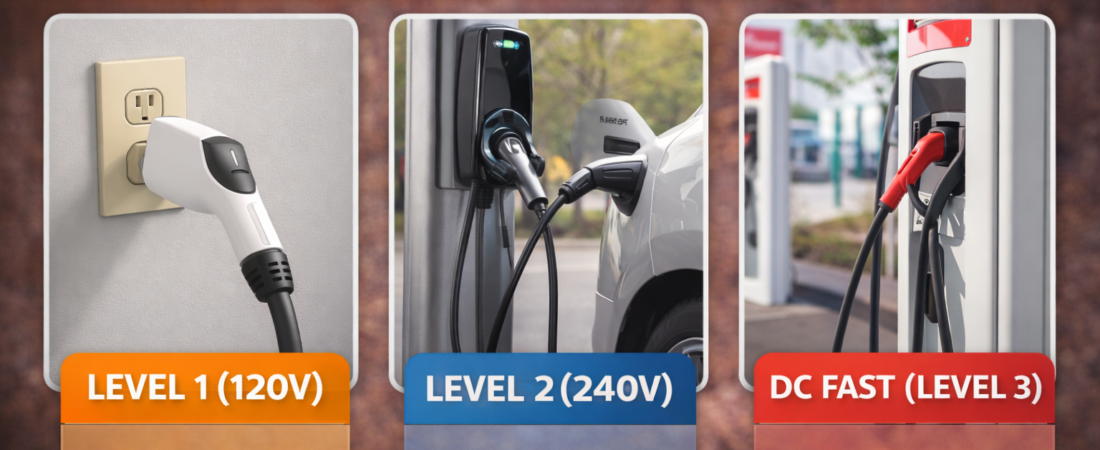
Level 1 chargers are the simplest. They use a normal home outlet. This means a 120-volt plug. You can plug your car in at home easily. But the charging speed is slow. It adds about 3 to 5 miles of range per hour. This is good for small daily drives.
Where to find Level 1 chargers?
- At home using a regular wall outlet
- Some workplaces
Level 2 Chargers
Level 2 chargers use a special outlet. They run at 240 volts, like a dryer plug. These chargers are faster than Level 1. They add about 15 to 30 miles of range per hour. Many people install Level 2 chargers at home. They are also common in parking lots and shops.
Where to find Level 2 chargers?
- Home garage or driveway
- Shopping centers
- Office parking lots
Dc Fast Chargers
DC Fast Chargers are the fastest. They use direct current (DC) to charge cars quickly. These chargers can add 60 to 80 miles of range in 20 minutes. They are perfect for road trips and long drives. But these chargers are expensive and need special installation.
Where to find DC Fast Chargers?
- Highway rest stops
- Public charging stations
- Some city centers
Charging Connectors: How Do Chargers Plug In?
EV chargers have different plugs. Not all EVs use the same connector. Here are the main connector types:
| Connector Type | Number of Pins | Power Type | Where Used | Key Features |
|---|---|---|---|---|
| SAE J1772 | 5 | Single-phase AC | North America, Asia | Manual latch, slower charging |
| Mennekes (Type 2) | 7 | Single or three-phase AC | Europe, global adoption | Automatic lock, smart charging |
| CCS (Combined Charging System) | 7 + 2 for DC | AC and DC fast charging | Global standard | Supports fast charging for road trips |
| Tesla Connector | Proprietary | AC and DC fast charging | Tesla vehicles in North America | Fast charging, Tesla network |
More About SAE J1772
This connector is common in the US and Asia. It has five pins. It works with single-phase AC power. This means charging is slower than other types. The plug uses a manual latch. You can unplug it easily. It is common for home and public Level 1 or Level 2 chargers.
More About Mennekes (Type 2)
The Mennekes plug has seven pins. It works with single or three-phase AC. This makes charging faster and more efficient. It has an automatic electromagnetic lock. This lock prevents unplugging while charging. It is safer and used widely in Europe. It supports smart features like solar power and billing.
What Is CCS?
CCS stands for Combined Charging System. It uses a Type 1 or Type 2 plug plus two extra pins. These extra pins allow fast DC charging. CCS chargers are common for road trips. You find them on highways and public fast charging stations. They can charge your car much quicker than AC chargers.
Tesla Connector
Tesla uses its own connector in North America. It works for both AC and DC charging. Tesla’s network of Superchargers uses this plug. It allows very fast charging. Other electric cars need adapters to use Tesla chargers.
Which Charger Is Best for You?
Your choice depends on your needs. Think about where you will charge your car. Also, consider how fast you want to charge.
- If you drive a little each day: Level 1 charger may be enough.
- If you want faster home charging: Level 2 charger is a good choice.
- If you travel long distances: Use DC Fast Chargers on the road.
Where to Buy EV Chargers?
You can buy EV chargers at many stores. Some popular places include:
- Home Depot
- Best Buy
- AutoZone
Prices vary from $100 to $800 or more. Installation might cost extra. Some sellers also offer installation services.
Summary of EV Charger Types
| Charger Type | Voltage | Charging Speed | Common Uses |
|---|---|---|---|
| Level 1 | 120V AC | 3-5 miles per hour | Home, slow charging |
| Level 2 | 240V AC | 15-30 miles per hour | Home, work, public places |
| DC Fast Charger | 400+ V DC | 60-80 miles in 20 min | Highways, long trips |