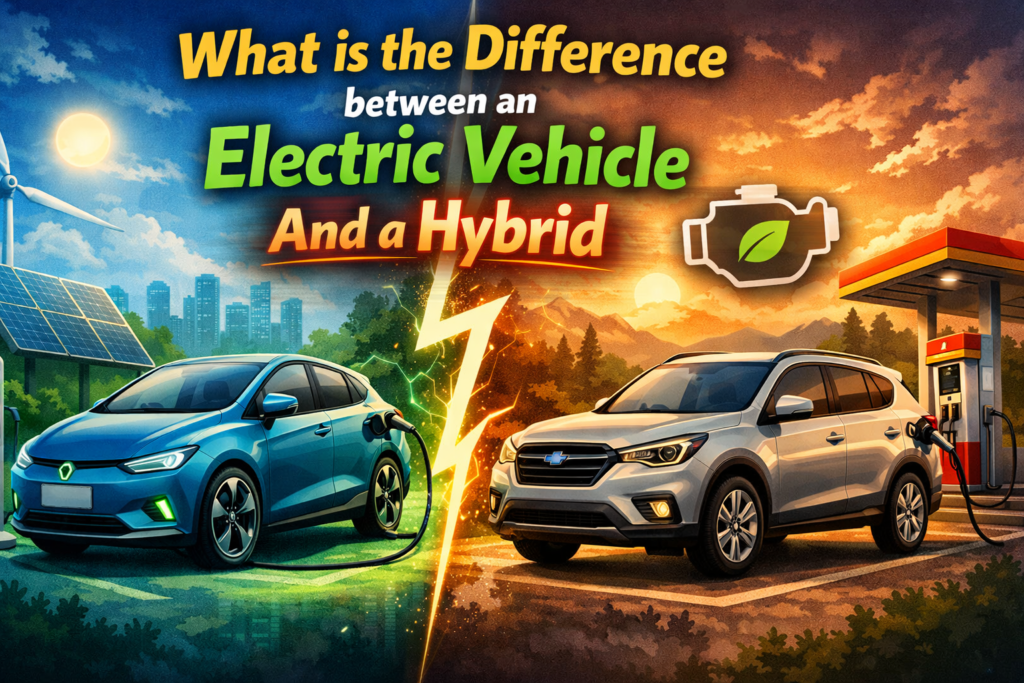
What is the Difference between an Electric Vehicle And a Hybrid: Key Facts Revealed
Wendy
Wendy is an EV expert who specializes in real-world electric car usage, charging solutions, and ownership costs. Her goal is to help everyday drivers understand electric vehicles with clear, honest, and experience-based insights.
Cars today come in many types. Two popular kinds are electric vehicles and hybrids. Many people wonder what makes them different. This article will explain the main differences in simple words.
What is an Electric Vehicle?
An electric vehicle, or EV, runs only on electricity. It uses a big battery and an electric motor to move. The battery stores energy. You charge it by plugging the car into a power outlet.
Electric vehicles do not use gasoline or diesel. That means they do not produce smoke or harmful gases when you drive. They are quiet and smooth. Many people like them for this reason.
How Does An Electric Vehicle Work?
The electric motor gets power from the battery. When you press the gas pedal, the motor turns and moves the car’s wheels. When you brake, the car can save some energy back into the battery. This is called regenerative braking.
Key Features Of Electric Vehicles
Runs only on electricity
Needs to be plugged in to recharge
Zero exhaust emissions
Quiet and smooth driving
Lower maintenance needs
What is a Hybrid Vehicle?
A hybrid vehicle uses two types of power. It has a gasoline engine and an electric motor. The car can use either one or both to move. The electric motor gets power from a smaller battery.
The gasoline engine runs on fuel like regular cars. The electric motor helps save fuel and reduce pollution. The car charges its battery while driving. You do not always need to plug it in.
How Does A Hybrid Vehicle Work?
The car decides when to use the electric motor or the gasoline engine. At low speeds, it may use only electricity. When you drive faster or need more power, the gasoline engine starts.
When you brake, the car saves energy to recharge the battery. This helps use less gas and produce fewer emissions.
Types Of Hybrid Vehicles
Standard Hybrid (HEV): Charges battery with engine and braking. No plug-in needed.
Plug-in Hybrid (PHEV): Can be plugged in to charge battery. Has larger battery and more electric-only range.
Key Features Of Hybrid Vehicles
Uses both gasoline engine and electric motor
Smaller battery than electric cars
Reduces fuel use and emissions
Can run on gasoline if battery is low
Usually does not need to plug in (except plug-in hybrids)
Main Differences Between Electric Vehicles and Hybrids
Feature
Electric Vehicle (EV)
Hybrid Vehicle
Power Source
Only electric motor and battery
Electric motor and gasoline engine
Fuel
Electricity only
Gasoline and electricity
Charging
Must be plugged in to recharge
Battery charges by engine and braking; some plug-in hybrids can be charged
Emissions
No tailpipe emissions (zero emissions)
Lower emissions than regular cars but still some emissions
Range
Limited by battery capacity; may cause range anxiety
Longer range due to gasoline engine backup
Maintenance
Less maintenance; no oil changes needed
More complex; two power systems to maintain
Cost
Higher upfront cost
Usually lower upfront cost than EVs
Advantages and Disadvantages
Electric Vehicle Pros
No exhaust pollution
Lower cost to run on electricity
Quiet and smooth ride
Fewer parts to fix
Electric Vehicle Cons
More expensive to buy
Need charging stations
Long charging times
Limited driving range
Hybrid Vehicle Pros
Lower cost than EVs
No worry about running out of power
Refuel quickly at gas stations
Better fuel efficiency than regular cars
Hybrid Vehicle Cons
Still produces some emissions
More parts can mean more repairs
Electric-only driving range is small
Plug-in hybrids need charging for best use
Which One Should You Choose?
Choosing between an electric vehicle and a hybrid depends on your needs.
Choose A Hybrid If:
You drive long distances often
You do not have easy access to charging at home
You want to spend less money at first
You want to avoid range anxiety
Choose An Electric Vehicle If:
You mostly drive short distances
You can charge your car at home or work
You care about the environment and want zero emissions
You want lower running costs over time
Summary
Electric vehicles run only on electricity. They are clean but need charging.
Hybrids use both gasoline and electricity. They are more flexible but still use fuel.
Each has good and bad points. Your choice depends on your lifestyle and budget.
Thinking about how you drive will help you pick the right car.
We hope this guide made the difference clear and easy to understand.
Frequently Asked Questions
Is A Hybrid Or Electric Car Better?
A hybrid suits long trips, offers lower upfront costs, and avoids charging worries. An electric car saves on fuel, produces zero emissions, and costs less to maintain but needs charging infrastructure. Choose based on driving habits, budget, and access to charging.
What Are Two Disadvantages Of Electric Or Hybrid Vehicles?
Two disadvantages of electric or hybrid vehicles are limited driving range and longer refueling or charging times. They often cost more upfront than conventional cars.
How Is A Hybrid Different From An Ev?
A hybrid combines a gasoline engine with an electric motor, while an EV runs solely on battery power. Hybrids need no charging stations; EVs require plug-in charging. Hybrids emit some tailpipe pollution; EVs produce zero emissions. Maintenance is simpler and cheaper for EVs than hybrids.
What Is The Main Difference Between Electric And Hybrid Vehicles?
Electric vehicles run only on batteries, while hybrids use both gasoline and electric power. Hybrids switch between or combine these power sources for better fuel efficiency.