Electric cars are growing in popularity worldwide. Many people wonder if electric cars can charge themselves. The idea sounds simple. Drive your car, and it fills its own battery. But is this really possible? Let’s explore the truth about electric car self-charging in easy words.
What Does “Self-Charging” Mean?
Self-charging means a car charges its battery without plugging into a power source. You just drive, and the battery refills by itself. Sounds great, right? But the truth is more complex.
There are different types of cars often called “self-charging.” Most are hybrids, not fully electric cars.
Types of Self-Charging Cars
| Type | How It Works | Limitations |
|---|---|---|
| Self-Charging Hybrids (HEVs) |
|
|
| Solar-Integrated Electric Vehicles (EVs) |
|
|
How Do Self-Charging Hybrids Work?
Self-charging hybrids have two power sources: a gasoline engine and an electric motor. The gas engine drives the car and also charges the battery. This system lets the car run on electric power for short distances.
When the car slows down, regenerative braking turns the wheels’ energy into electricity. This electricity goes back to the battery. So, you get some battery recharge without plugging in.
But these cars still use gasoline. They are not fully electric. Their batteries are smaller than those in electric cars.
What Is Regenerative Braking?
Regenerative braking is key to self-charging cars. When you press the brake, the car’s wheels slow down. Instead of wasting this energy as heat, the car converts it into electricity.
This electricity charges the battery. Regenerative braking helps extend the battery life. But it can only recover some energy. It cannot fully recharge the battery while driving.
Can Fully Electric Cars Charge Themselves?
Fully electric cars run only on electricity. They do not have a gas engine. So, they must plug into a charger to fill their batteries.
Many people ask if electric cars can charge themselves. The short answer is no. Physics makes this impossible.
Energy cannot be created from nothing. When the car moves, it uses battery power. Regenerative braking helps a little, but it does not add more energy than used.
This means a car cannot drive forever without plugging in. It needs external electricity.
Why Can’t Electric Cars Be Fully Self-Charging?
The laws of physics explain why. An electric car uses energy to move. Some energy returns through regenerative braking, but this is less than what is used.
Think of it like this: If you try to fill a bucket with water but some water leaks out, the bucket will never fill itself. The same happens with energy in electric cars.
Energy loss happens in the electric motor and battery. So, the car cannot create energy on its own to recharge fully.
Solar Panels on Electric Cars
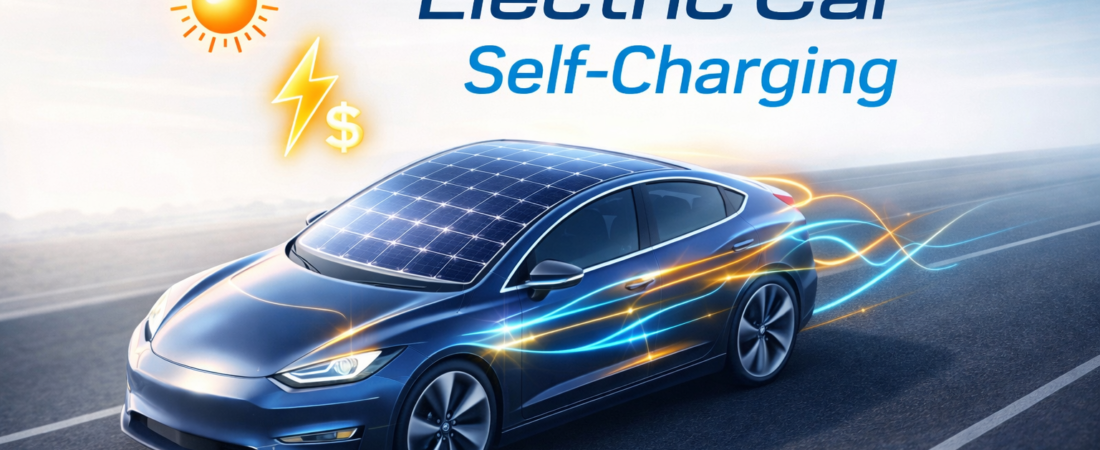
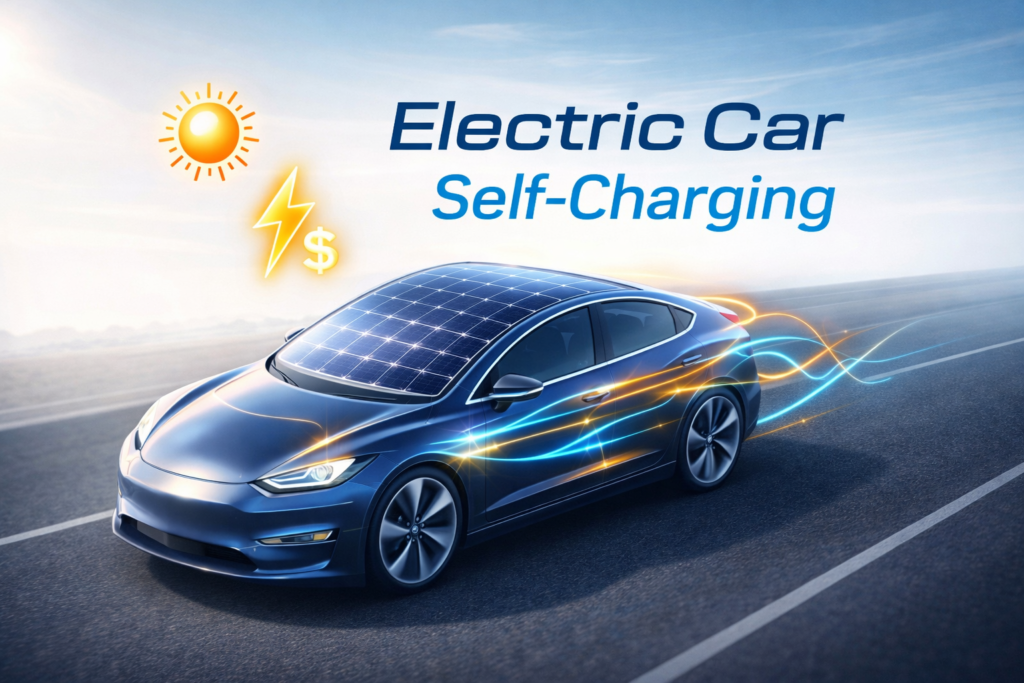
Some electric cars have solar panels on their roofs or bodies. These panels catch sunlight and turn it into electricity.
Solar power can add a small amount of charge. This might give a few extra miles of driving per day.
However, solar panels on cars cannot provide enough power for long drives. They work best as a helper, not the main charger.
Examples of Solar-Integrated Cars
- Sono Sion: A car with solar panels on its body.
- Aptera: A car designed to use solar power to extend its range.
These cars show how solar energy can help but not replace charging stations.